
Social housing regulation in England has changed significantly in recent years. If you work in the sector or are considering investing in social housing, you’ve probably heard about the Regulator of Social Housing, but what exactly do they do?
Who is responsible for social housing in the UK?
Social housing responsibility in the UK is split across different nations. In England, the Regulator of Social Housing handles all regulatory oversight of social housing providers. Scotland has its own system through the Scottish Housing Regulator, while Wales uses the Welsh Government’s housing regulation team. Northern Ireland manages social housing regulation through the Department for Communities.
This means that housing associations, local authorities, and councils operating in England fall under the RSH’s remit, regardless of the size or number of properties they manage. The regulator covers everything from large housing associations with tens of thousands of homes to smaller community-based providers with just a few hundred properties.
When was the Regulator of Social Housing (RSH) established?
The RSH was created in April 2018 under the Housing and Regeneration Act 2008. It replaced the previous system, where the Homes and Communities Agency handled social housing regulation alongside other responsibilities.
Before 2018, social housing regulation had gone through several changes. The Housing Corporation was the original regulator until 2008, when it became part of the Homes and Communities Agency. The decision to create a separate, dedicated regulator came after concerns that housing regulation needed more focus and independence to properly protect tenants and public investment.
What does the Regulator of Social Housing do?
The RSH has two main jobs:
- Making sure providers of social housing deliver good services to tenants
- Protecting public money invested in social housing.
On the tenant side, they check that registered providers meet social housing quality standards covering home condition, repairs, complaint handling, and tenant involvement. They also make sure providers are taking proper care of tenant safety, especially around fire safety and building safety requirements.
On the financial side, they monitor whether providers are managing their money responsibly and staying financially viable. This includes checking business plans, examining governance arrangements, and ensuring providers can continue operating without needing taxpayer bailouts.
The regulator also registers new social housing providers and can remove registration from organisations that no longer meet the required standards.
What powers does the Regulator of Social Housing have over social housing providers?
The RSH’s powers were significantly strengthened by the Social Housing Regulation Act 2023. This legislation removed the “serious detriment test”, meaning the RSH can now use its powers without the need for it to be satisfied that there is a risk of serious detriment to residents.
The RSH has different levels of power depending on how serious any problems are.
Day-to-day Regulatory Powers
- Request information and data from providers
- Carry out inspections and assessments
- Issue regulatory notices when they have concerns
- Downgrade regulatory judgments for poor performance
Enforcement Powers for Serious Issues
- Issue enforcement notices requiring specific actions
- Impose financial penalties
- Appoint additional board members to improve governance
- Remove existing board members
- Transfer housing stock to other providers
- Remove an organisation’s registration entirely
Financial and Asset Control
- Block property disposals that aren’t in tenants’ interests
- Require additional security for loans
- Restrict what providers can do with their assets
The key thing to remember is that the RSH’s approach is proportionate – they’ll try to work with providers to fix problems before using their strongest powers.
Who controls the Regulator of Social Housing?
The RSH operates as an independent regulator, but it still has oversight from the government.
The regulator reports to Parliament and publishes an annual report showing what it’s been doing and how the social housing sector is performing. The Secretary of State for Levelling Up, Housing and Communities appoints the RSH’s board members and can set the overall strategic direction through policy statements.
However, the government can’t interfere with individual regulatory decisions. This independence means the RSH can make tough decisions about poorly performing providers without political pressure getting in the way.
The regulator is also accountable to tenants and taxpayers through its transparency requirements. It publishes all its regulatory judgements, enforcement actions, and performance data so people can see how social housing providers are doing.
What are regulatory judgements?
Regulatory judgements are the RSH’s report cards for social housing providers. They give each provider grades that show how well they’re performing in different areas.
Economic Standards (apply to housing associations only, not councils)
- Governance and Financial Viability Standard – requires effective governance arrangements that deliver aims and outcomes in an effective, transparent and accountable manner
- Value for Money Standard – requires clear strategic objectives and an approach to achieving value for money
- Rent Standard – mandates that rents should increase by no more than CPI plus 1 per cent
Consumer Standards (apply to all providers)
- Transparency, Influence and Accountability Standard – covering tenant consultation and complaints procedures
- Safety and Quality Standard – making sure tenants’ homes meet decent home standards and are properly maintained
- Tenancy Standard – covering fair allocation, tenancy types, and preventing unnecessary evictions
- Neighbourhood and Community Standard – working with partners on community wellbeing
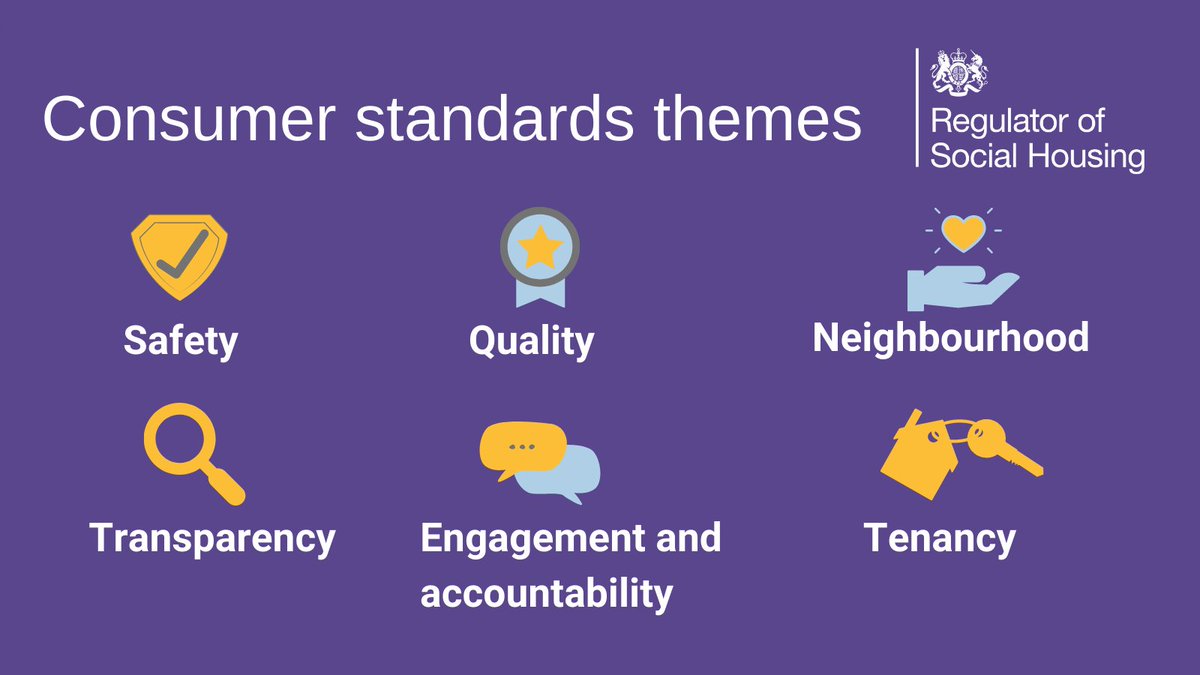
The judgements use a simple grading system, and they’re published on the RSH website so anyone can look up how their housing provider is performing. Providers with poor grades face increased scrutiny and need to take specific action to improve.
These judgements aren’t just bureaucratic box-ticking – they directly affect what providers can and can’t do. Poor grades can restrict access to funding and limit business activities.
What are the definitions of the four consumer grades?
The RSH also gives consumer grades that focus on how well providers treat their tenants. There are four possible grades:
| Grade | What This Means |
| C1 – Compliant | The provider meets all standards and has effective systems to maintain compliance. |
| C2 – Compliant, but some concerns | The provider meets standards, but the regulator has identified areas where performance could improve or risks that need managing. |
| C3 – Non-compliant | The provider has failed to meet one or more consumer standards, putting tenants at risk or causing them detriment. |
| C4 – Serious non-compliance | The provider has serious and systemic failures in meeting consumer standards, with significant risk to tenant safety or serious detriment to tenants. |
Most providers should aim for a C1 or C2 grade. If they get a C3 or C4, expect the regulator to take action quickly to protect tenants.
Investing in Regulated Social Housing
Looking to invest in social housing or expand your property portfolio? Understanding regulatory requirements is just one piece of the puzzle when it comes to successful social housing investment.
At Yield Investing, we help investors navigate the complexities of the social housing market, from identifying opportunities with compliant providers to the financial returns available in this stable sector.
Ready to explore social housing investment opportunities? Contact our team today to discover how regulatory-compliant social housing can deliver consistent returns while making a positive social impact.