
Let’s set the context first.
Government targets suggest England needs around 300,000 new homes a year across all tenures. Of these, 145,000 new affordable homes are needed annually for the next 10 years to clear the current backlog, with 90,000 of these needed specifically for social rent.
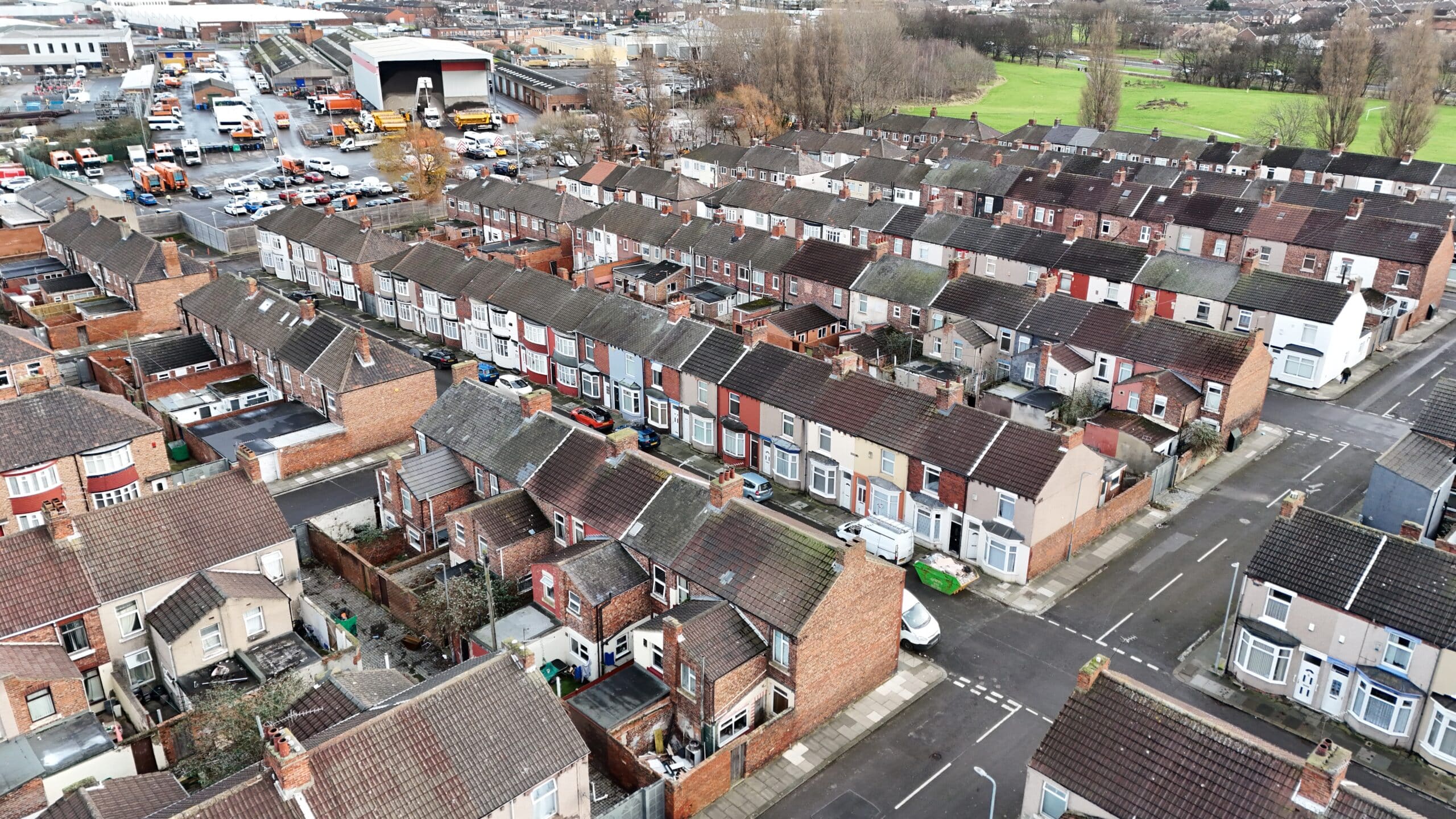
Delivery, however, has been falling short. In 2023/24, for example, net additions were 221,070, and only a fraction of these were social rent. Much of ‘affordable housing’ is actually affordable rent or shared ownership, not social rent, which can still be expensive for low-income households.
In 2024, the official social rented sector, council and housing association homes in England were just over 4.5 million. This is a decline of close to 1 million in social housing stock in England from 5.5 million dwellings in 1981.
These numbers are deeply concerning.
There are a number of factors that have resulted in this shortfall in social housing in the UK.
- Right to Buy (introduced in 1980) allowed tenants to buy council homes at a discount. Around 1.9 million council homes were sold under the scheme. However they weren’t replaced like for like with new social units.
- Demolition: In England alone, tens of thousands of social rent homes have been demolished over the past two decades, often in large-scale regeneration schemes. For example, between 2012/13 and 2021/22, over 160,000 social homes were lost through sales or demolition. That’s more than the number of new social rent homes built in the same period. In 2022–23, over 27,000 social homes were lost through sales or demolitions, compared to just 9,561 social rent completions. That’s a nearly threefold net decline. In 2023–24, total sales and demolitions numbered approximately 21,000. With 9,866 completions, that resulted in a net loss of approximately 11,200 social homes.
- Large Scale Voluntary Transfers: transfers from local authority stock to housing associations reduced councils’ direct role in building and managing homes. The councils’ smaller stock meant less rental income and therefore less available to spend on building programmes. Housing associations became the main developers of social and affordable housing. By 2023/24, housing associations owned roughly 60% of England’s social housing stock. They became the main recipients of government capital grant and the main developers of ‘affordable’ housing.
- Housing associations can’t fill the gap: housing associations are only partially filling the gap left by reduced council building. While social rent is set using a national formula, usually well below market rents, typically 40-50% of local market levels, affordable rent, introduced in 2011, can be up to 80% of local market rent, which is still too expensive for many low-income households. So the units being delivered by housing associations are not always at the deepest level of subsidy needed and they make up most of the new supply. In 2023–24, just 16% of newly built below-market-rent homes were for social rent, down from 87% in 1992–93.
- Empty unusable houses: As of late 2023, the number of long-term empty homes in England, unoccupied and unfurnished for more than 6 months stood at approximately 261,000. Many require significant refurbishment, and reopening them is administratively complex – tracking down owners is time-consuming, structural dilapidation, planning constraints, and lack of funding mean many remain uninhabitable or uneconomic to refurbish.
Higher absolute numbers of empty houses are often in post-industrial northern regions. These stem from economic decline and outmigration. For example, as of early 2025, North East and North West had some of the highest long-term vacancy counts (e.g., Durham, Liverpool, North Yorkshire). Rapidly rising vacancy rates are seen in the South West and London. In these regions, that are tourist-heavy, second homes and holiday lets play a larger role.
Councils want to bring empty homes back into use, but there are several reasons why they struggle to do so. One reason is funding constraints due to budget cuts from the central government, the lack of ring fenced renovation funds, and expensive renovations that require external grants to be feasible. Another reason is private ownership issues including absent landlords, probate homes, homes tied up in dispute. A third is Housing Revenue Account rules around self-financing that stipulate that income from rents must cover maintenance and investment. The rent in this case may not justify the heavy work needed to refurb. A fourth reason is the skills and capacity shortage to manage renovation projects. A fifth reason is the cost of renovation that often exceeds market value, making it economically irrational without significant subsidies. And finally competing priorities, with councils facing the pressure to build new housing to meet targets, and respond to emergency housing requirements. - Planning, land, financial constraints: The planning system is slow and contested, local opposition often prevents higher-density or large-scale schemes. Green Belt policies restrict where land can be released, especially near high-demand cities. Even when funding is available, planning approvals can take years, judicial reviews and local political pushback can halt or scale back projects. Moreover, large-scale social housebuilding requires substantial grant, and delivery takes time. In addition, there are rising costs, including compliance costs and construction costs.
All of these factors have driven Yield to identify multiple opportunities where investment can support social housing to create a sustainable pipeline of much needed homes whilst also providing regular, stable returns. We’ll explore how private capital can help in the next blog.