
Gross rate of return is the total percentage gain an investment produces over a given period, before any costs, taxes, or fees are deducted. It gives you a headline figure for how an asset has performed.
How Gross Rate of Return Works in Property Investment
In property investment, gross rate of return captures everything your investment has generated, including rental income and capital growth, expressed as a percentage of the original amount invested.
Note: Gross rate of return doesn’t account for mortgage interest, maintenance costs, letting agent fees, insurance, or the tax you’ll owe on your income and capital gains. Strip those out and your actual return could look quite different.
How to Calculate Gross Rate of Return
The formula is straightforward:
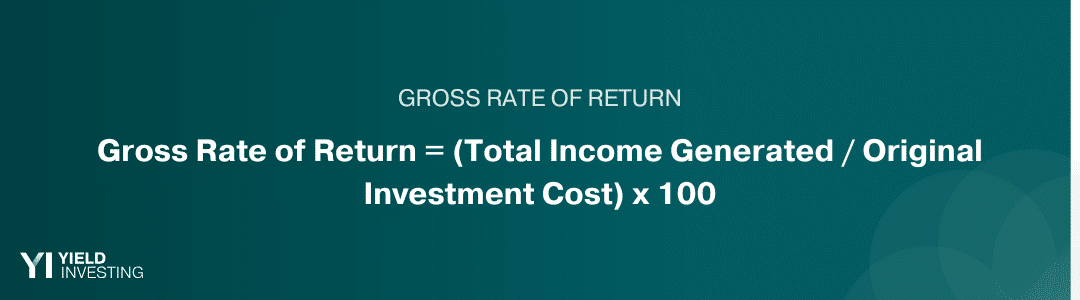
Gross Rate of Return = (Total Income Generated / Original Investment Cost) x 100
Say you buy a property for £200,000. Over one year, you collect £10,000 in rent and the property rises in value by £10,000.
Using the example above: (£20,000 / £200,000) x 100 = 10%
Total income includes all rental income received plus any increase in the property’s value over the period. The original investment cost is typically the purchase price, though some investors include acquisition costs such as stamp duty and legal fees for a more accurate picture.
Why Investors Use Gross Rate of Return
Gross rate of return is most useful as a quick comparison tool. When you’re evaluating multiple opportunities side by side, it lets you rank them by raw performance before getting into the detail of each one’s cost structure.
It’s also commonly used in investment marketing. Projected returns in brochures and proposals are almost always quoted gross. That’s not misleading by itself, but it does mean you should always ask what the net figure looks like before making a decision.
Gross Rate of Return vs Net Rate of Return
The gap between gross and net return varies depending on:
- Property type
- Location
- How it’s managed.
A high-yielding property in a regional city might show an impressive gross rate of return but carry higher void risk or maintenance costs than a lower-yielding asset in a more stable market. The gross figure gets you in the door – the net figure tells you whether it’s worth walking through.