
If you’re thinking about investing in UK property in 2025, rental yield is probably one of the first things on your mind. And rightly so – it’s one of the most important metrics for measuring how profitable a rental property could be.
But with house prices and rents varying dramatically across the country, knowing what constitutes a good rental yield can be tricky. Some areas offer eye-watering returns of over 8%, while others barely scrape 3%.
We’ll break down the average rental yields across the UK in 2025, region by region and city by city. Whether you’re a first-time property investor or looking to expand your portfolio, you’ll get a clear picture of where the best opportunities lie right now.
What is a rental yield?: Gross vs Net Rental Yield
Rental yield is your annual rental income as a percentage of what you paid for the property.
There are two types of rental yield you need to know about:
Gross Rental Yield is your total annual rent divided by the property purchase price, multiplied by 100. This gives you a quick snapshot of potential returns, but it doesn’t account for any of the costs involved in being a landlord.
Net Rental Yield includes mortgage payments, insurance, maintenance, letting agent fees, and any periods when the property sits empty. While it’s a bit more work to calculate, net yield gives you a realistic picture of what you’ll actually pocket.
Most buy-to-let property investors start by looking at gross yields to quickly compare different areas and properties, then drill down into net yields for serious investment decisions.
How to Calculate Rental Yield
The formula for gross rental yield is straightforward:
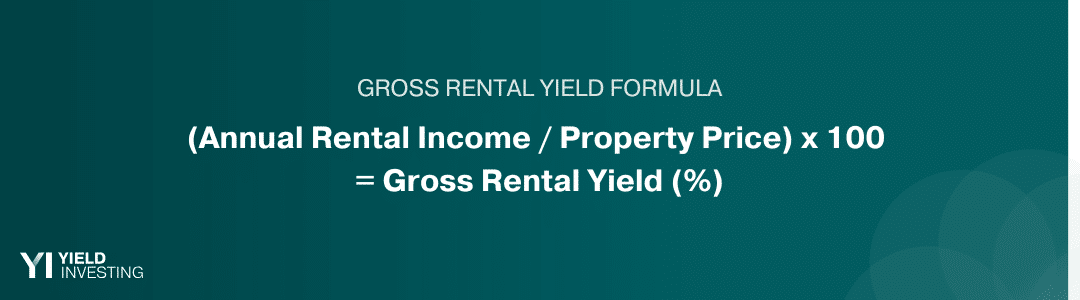
For example, if you buy a property for £200,000 and rent it out for £1,000 per month:
- Annual rental income = £1,000 × 12 = £12,000
- Gross rental yield = (£12,000 ÷ £200,000) × 100 = 6%
For net rental yield calculations, you’ll need to subtract your annual expenses from the rental income first:
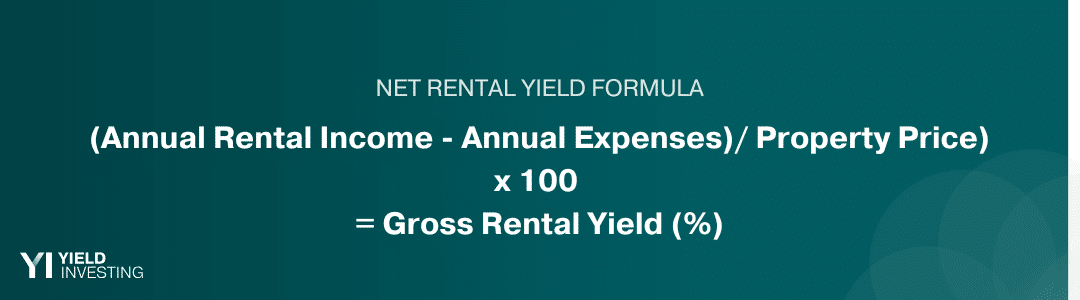
If those same expenses total £3,000 per year:
- Net rental income = £12,000 – £3,000 = £9,000
- Net rental yield = (£9,000 ÷ £200,000) × 100 = 4.5%
The difference between gross and net yield can be significant, so always factor in your costs when making investment decisions.
UK Average Rental Yield
According to the latest data, the average house price across the UK hit £268,400 in June 2025. That’s up 1.4% (or £3,690) from the previous year – a relatively modest increase compared to the dramatic rises we saw in recent years.
Meanwhile, average monthly rent now sits at £1,328, just 0.2% higher than August 2024. This small increase shows the rental property market has largely stabilised after years of sharp growth.
The average gross rental yield across the UK is 5.94%, which is quite healthy compared to other investment options, especially when you consider current savings account rates and bond yields.
But this national average masks huge variations depending on where you invest. Some regions are delivering yields around 7%, while others struggle to reach 4%. Location really is everything in property investment.
Average Rental Yields in the UK by Region
The regional breakdown shows just how much location affects your potential returns. Here’s what the latest data from the Homelet Rental Index and HM Land Registry UK House Price Index shows across all UK regions:
| Region | Average Property Price | Average Rent | Average Rent Per Annum | Rental Yield |
| London | £561,309 | £2,083 | £24,996 | 4.45% |
| South East | £383,486 | £1,431 | £17,172 | 4.48% |
| South West | £301,660 | £1,194 | £14,328 | 4.75% |
| West Midlands | £246,910 | £1,026 | £12,312 | 4.99% |
| East Midlands | £238,635 | £896 | £10,752 | 4.51% |
| East of England | £337,920 | £1,304 | £15,648 | 4.63% |
| North East | £163,679 | £701 | £8,412 | 5.14% |
| North West | £212,057 | £1,082 | £12,984 | 6.12% |
| Yorkshire & the Humber | £204,410 | £920 | £11,040 | 5.4% |
| Wales | £209,728 | £933 | £11,196 | 5.34% |
| Scotland | £191,927 | £1,017 | £12,204 | 6.36% |
| Northern Ireland | £185,108 | £935 | £11,220 | 6.06% |
Updated: August 2025
Scotland leads with 6.36% the highest rental yields on the UK property market, followed closely by the North West at 6.12% and Northern Ireland at 6.06%. Regions of the north like Yorkshire & the Humber (5.4%) and the North East (5.14%) also perform well, offering solid returns with the lowest property prices in England. Unexpectantly, the average rental yields in London and the South East both struggle to break 4.5%, despite commanding the highest rents.
While southern regions generate more rental income, their sky-high property prices reduce overall returns. Northern areas and Scotland not only offer the best housing prices in the UK but also decent rental demand.
Best Rental Yields in the UK by City
Looking at individual cities reveals even starker differences in potential returns. Here’s what the latest Zoopla data shows for the best places to invest in property in the UK by city:
| City | Average Buy-to-Let Price | Average Monthly Rent | Annual Rental Growth | Rental Yield |
| Sunderland | £83,842 | £626 | 9.40% | 8.96% |
| Aberdeen | £102,920 | £689 | 6.20% | 8.03% |
| Burnley | £84,869 | £566 | 10.90% | 8.00% |
| Hull | £98,617 | £612 | 10.10% | 7.45% |
| Newcastle | £134,245 | £833 | 6.60% | 7.45% |
| Liverpool | £129,172 | £801 | 9.80% | 7.44% |
| Manchester | £196,603 | £1,070 | 11.10% | 6.53% |
Data from Zoopla
Sunderland leads the way with yields approaching 9%, followed closely by Aberdeen at just over 8%. What’s particularly striking are the rental growth rates – Burnley and Hull are seeing double-digit annual rent increases, suggesting strong demand despite lower absolute rental prices.
These northern cities and Scottish locations consistently outperform their southern counterparts by offering affordable entry prices combined with solid rental demand. While offering the lowest yield on this list at 6.53%, Manchester still delivers impressive rental growth at 11.1% annually.
The data reinforces the regional pattern: northern England and Scotland continue to offer the most attractive combination of purchase prices, rental yields, and growth potential for property investors.
What can impact the rental yield of rental properties?
Property Condition & Age
Older properties typically cost less to buy, but they often need more repairs and maintenance work. You might spend more fixing boilers, replacing windows, or dealing with damp issues. There’s also a higher chance of longer gaps between tenants as older properties can be harder to rent out. Newer properties require a bigger upfront investment but generally cause fewer problems and attract tenants more quickly.
Local Job Market
Areas with major employers or expanding industries tend to have stronger rental demand. When people have stable employment, they’re more likely to pay rent on time and stay in properties for longer periods. Areas where industries are declining or unemployment is high often see weaker rental markets.
Transport Links
Property near train stations, bus stops, or major roads typically rents faster and commands higher rental prices. Many tenants will pay a premium for the convenience of easy commuting. The difference between being a 5-minute walk from transport and a 20-minute walk can significantly impact both rental speed and achievable rent levels.
Schools & Local Facilities
Different tenant demographics prioritise different amenities. Families often focus on school quality and catchment areas when choosing where to rent. Young professionals might prioritise nightlife, restaurants, and gym facilities. Areas where local services are declining – like high streets with many empty shops – often struggle to maintain strong rental demand.
Rental Property Supply
The number of available rental properties in your area directly affects the rent you can charge. In areas saturated with rental options, landlords often have to compete on price, keeping rents low. Areas with limited rental supply but strong demand typically see better rent growth over time.
Property Management
Using a letting agent typically costs 10-15% of your rental income, but they handle tenant finding, maintenance coordination, and problem resolution. Managing the property yourself saves these fees but requires significant time investment and landlord knowledge. The choice often depends on how close you live to the property, your available time and experience level.
Mortgage Interest Rates
If you’re using a mortgage to buy your rental property, changes in interest rates will affect your profits. When rates go up, your monthly mortgage payment increases, which means less money left over from the rent. This hits hardest when you’ve borrowed a large percentage of the property value, because mortgage payments take up a bigger chunk of your rental income.
Looking for property investment opportunities? Choose Yield Investing
While average UK rental yields sit around 5.87%, there’s a way to achieve higher yields while addressing the UK’s housing shortage: social housing investment.
At Yield Investing, we specialise in social housing developments that provide homes for key workers, families, and individuals who struggle to access private rental accommodation.
These investments offer secure 8-10% yields through long-term contracts with local councils and housing associations.
Social housing investments provide guaranteed rental income with minimal void periods, while removing typical landlord responsibilities like tenant finding, rent collection, and maintenance. The contracts typically run 10-25 years with built-in rent reviews.
By investing in social housing, you’re not just securing strong returns – you’re helping provide quality homes for people who need them most.
Get in touch to learn more about our social housing opportunities.